Causal Inference Emerges as Quant Finance's Next Frontier for Factor Investing and Risk Management
After decades of correlation-driven models, quantitative finance is absorbing causal inference methods at scale — from factor investing to portfolio risk to bankruptcy prediction — with the National Bureau of Economic Research and leading academic-industry voices now treating it as a core methodological shift rather than a niche technique.
The story
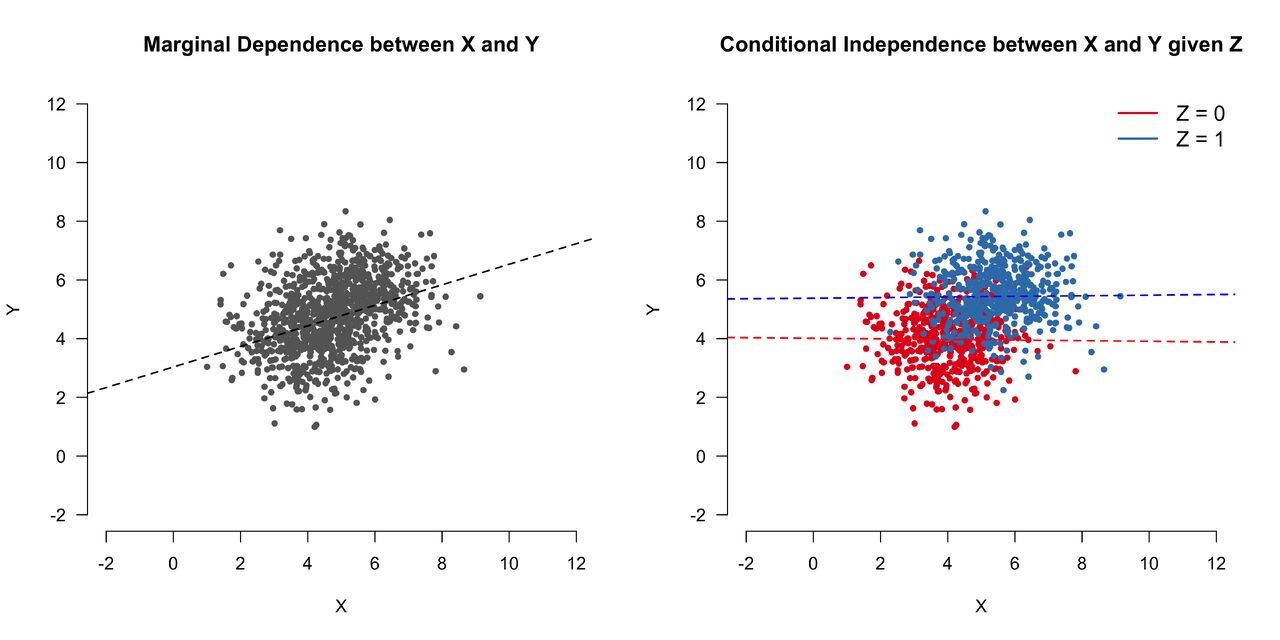
Quantitative finance has long built its models on correlation and prediction: identify a statistical pattern in historical data, and trade on the expectation that it persists. The field's growing embrace of causal inference is a direct response to the well-documented failure mode of that approach — factors and signals that look robust in backtests but decay or invert out of sample because they were never causally grounded in the first place.
The most prominent voice pushing this shift is Marcos López de Prado, whose forthcoming 2026 Journal of Portfolio Management paper with Vincent Zoonekynd, "Correcting the Factor Mirage," frames much of factor investing's underperformance as a specification problem: models that treat correlated variables as causal drivers misallocate capital in ways that only surface after the fact.
Related 2025 work by López de Prado, Zoonekynd, and Alexander Lipton argues that causal factor analysis is not just a nice-to-have refinement but a necessary condition for investment efficiency — a notably strong methodological claim from a widely cited voice in the field.
The academic mainstream is following. A 2026 NBER working paper, "Causal Inference for Asset Pricing" by Valentin Haddad, Zhiguo He, Paul Huebner, Péter Kondor, and Erik Loualiche, brings formal causal identification techniques directly into asset pricing theory — a sign that causal methods are moving from applied trading desks into core academic finance.
Risk management is adopting the same tools from a different angle. A comprehensive ACM Computing Surveys review of causal inference across banking, finance, and insurance — covering 45 papers published between 1992 and 2023 — documents growing use of Bayesian causal networks, Granger causality, and counterfactual analysis specifically to make AI/ML risk models explainable, a requirement that's become increasingly non-negotiable for regulators.
In credit portfolios specifically, counterfactual analysis is being used to model how classes of borrowers would have behaved under different conditions, directly informing stress testing. On the more experimental end, a 2025 paper (ARCADIA) applies agentic AI to automate causal discovery for corporate bankruptcy prediction — using AI agents not just to predict default, but to autonomously build the causal graph explaining why.
The throughline across all of this work is a shift in what "explainability" means in finance: not just producing a feature-importance score after the fact, but building models where the structure itself represents a causal claim that can be tested, stress-tested, and — critically for regulators — explained.
Key takeaways
López de Prado and Zoonekynd's 2026 “Correcting the Factor Mirage” reframes factor investing underperformance as a causal specification problem, not just noise.
A 2026 NBER working paper brings formal causal identification methods directly into asset pricing theory, signaling academic mainstream adoption.
Causal spillover networks and causal factor-investing networks are an active, fast-growing subfield as of 2025–2026.
An ACM Computing Surveys review of 45 papers (1992–2023) documents Bayesian causal networks, Granger causality, and counterfactual analysis becoming standard tools for explainable risk modeling in banking, finance, and insurance.
Agentic AI is beginning to automate causal discovery itself, not just causal-informed prediction (e.g., ARCADIA for bankruptcy analysis).
References
CFA Institute Research Foundation — López de Prado, “Causality and Factor Investing: A Primer.” Read more →
NBER Working Paper 35413 — Haddad, He, Huebner, Kondor, Loualiche, “Causal Inference for Asset Pricing” (2026). Read more →
arXiv — “Is Causality Necessary for Efficient Portfolios? A Computational Perspective on Predictive Validity and Model Misspecification” (Feb 2026). Read more →
ACM Computing Surveys — “A Comprehensive Review of Causal Inference in Banking, Finance, and Insurance.” Read more →
Clausius Press — Xu, “Causal Inference in Financial Risk Management: Applications of Counterfactual Analysis in Credit Portfolios” (2025). Read more →
arXiv — “ARCADIA: Scalable Causal Discovery for Corporate Bankruptcy Analysis Using Agentic AI.” Read more →