Autonomous AI Labs Are Compressing Drug Discovery Timelines From Years to Months
Self-driving laboratories — closed-loop systems that fuse generative AI, robotics, and automated experimentation — are moving from research curiosity to funded infrastructure, with some programs now taking AI-designed candidates from discovery to first-in-human trials in under two years.
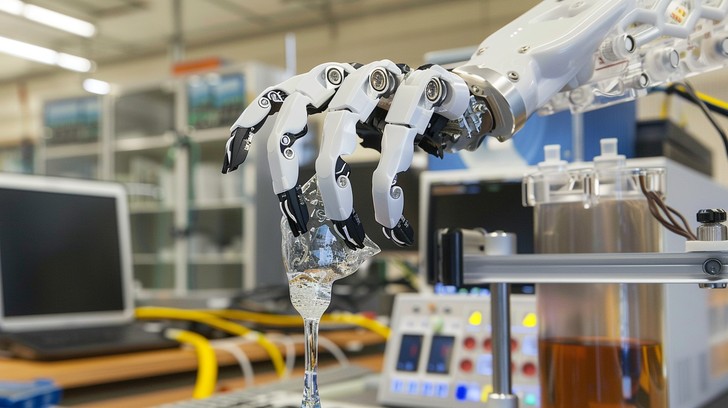
The story
For most of drug discovery's history, the design-make-test-learn cycle has been the rate-limiting step: a hypothesis is proposed, a compound synthesized, an assay run, and the results fed back into the next round of design — a loop that has traditionally taken months per iteration. That loop is now being automated end-to-end.
The clearest signal is the scale of capital moving into the space. Lila Sciences, launched by Flagship Pioneering in March 2025 with $200 million in seed funding, is building what it calls "AI Science Factories" — robotic, closed-loop laboratories where specialized AI models plan and execute experiments across biology, chemistry, and materials science with minimal human intervention.
The company raised a $235 million Series A in September 2025, followed a month later by an additional $115 million from investors including Nvidia's venture arm, pushing its valuation past $1.3 billion and total funding to $550 million. Lila has since signed a long-term lease for a 244,000-square-foot facility at IQHQ's Alewife Park life sciences district in Cambridge, Massachusetts, and plans to open the platform to commercial partners in drug development, energy, and semiconductors.
On the clinical side, Iambic Therapeutics reported early clinical activity at ESMO 2025 for an AI-designed HER2 inhibitor that moved from discovery to first-in-human dosing in under two years — a timeline that would have been unusual for a conventionally designed candidate. More broadly, dozens of AI-designed drug candidates have now entered clinical trials, a sharp contrast to 2020, when essentially none had reached human testing.
The acceleration isn't confined to a handful of flagship companies. A World Economic Forum-recognized collaboration between SandboxAQ and UCSF's Institute for Neurodegenerative Diseases used large quantitative AI models to compress neurodegenerative disease research timelines from years to months, work highlighted as part of the WEF's MINDS programme at AMNC 2025. And the competitive landscape has globalized: AI-focused biotechs in China accounted for nearly a third of global licensing deal value in AI-driven drug discovery in the first quarter of 2025 alone.
Underneath the funding and clinical headlines is a genuine architectural shift. Newer multi-agent systems — coordinating a "Literature Reader," "Experiment Designer," and "Robot Operator" as distinct AI agents — are being used to run chemical research largely on demand, with self-driving labs increasingly treated as core R&D infrastructure rather than pilot projects. The main constraint researchers now point to isn't robotics or model capability, but data: proprietary datasets remain siloed across institutions, and closing that gap is seen as the next bottleneck to further acceleration.
Key takeaways
Lila Sciences has raised $550M total (as of October 2025) to build robotic “AI Science Factories” spanning biology, chemistry, and materials science.
Iambic Therapeutics took an AI-designed HER2 inhibitor from discovery to first-in-human trials in under two years.
China-based AI biotechs captured nearly one-third of global AI drug-discovery licensing deal value in Q1 2025.
SandboxAQ and UCSF compressed neurodegenerative disease research timelines from years to months using large quantitative AI models.
Data siloing — not robotics or model quality — is emerging as the primary bottleneck to further acceleration.
References
BiopharmaTrend — “AI-driven Companies Creating Next Gen Infrastructure for Automated Drug Discovery” (Nov 2025). Read more →
World Economic Forum — “Using large quantitative models and AI in drug discovery” (Dec 2025). Read more →
ScienceDirect — “Leading artificial intelligence–driven drug discovery platforms: 2025 landscape and global outlook.” Read more →
OAE Publishing — “Artificial intelligence-driven autonomous laboratory for accelerating chemical discovery” (Sep 2025). Read more →
arXiv — “Accelerating drug discovery with Artificial: a whole-lab orchestration and scheduling system for self-driving labs” (Apr 2025). Read more →